
Skip to content
Kangaroo Direct Publishing — home

Design and production

Children's book illustration services for picture and chapter books

Character design, page-by-page storyboarding and finished artwork, typeset into a print-ready picture book. You own every illustration when it is done.

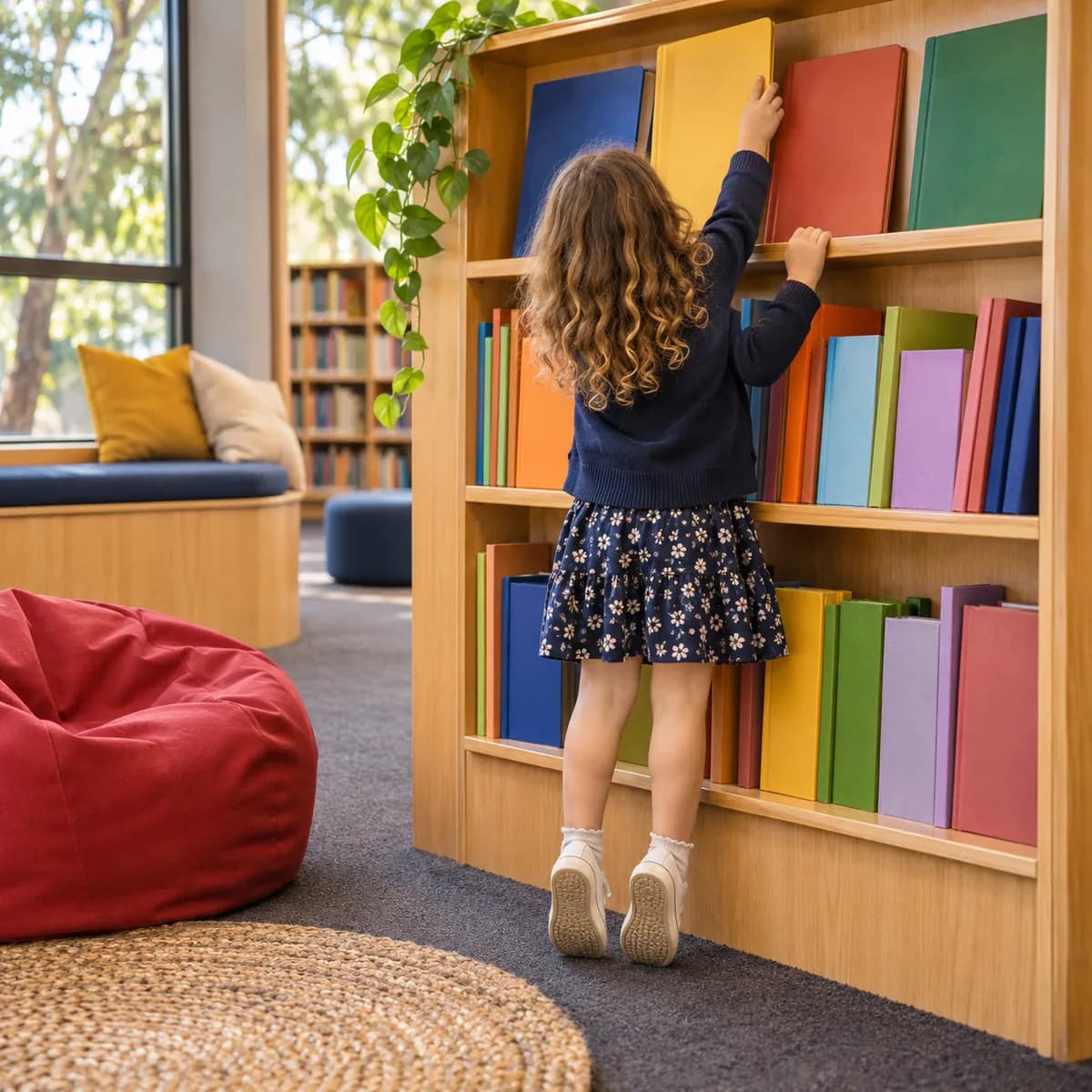
A child with curly hair reaching for a picture book on a library shelf

What it is

A picture book is designed in spreads, not pages

Thirty-two pages, sixteen spreads, and a page turn that has to earn itself. The illustration plan matters more than any single picture.

We start by breaking your text across the standard 32-page structure and working out what each spread has to do: establish, develop, surprise, resolve. Texts almost always need adjusting at this stage, because a sentence that reads well can sit badly across a turn.

Then character design — expression sheets, turnarounds, scale against other characters — because a character who changes shape between spread four and spread eleven is the fault young readers notice first. There is more on how we handle children's book publishing, and on choosing a cover that works for this audience in our guide to what makes a book cover sell.

  • A spread-by-spread storyboard before any finished art
  • Character sheets you approve: expressions, turnarounds, scale
  • Artwork at print resolution with bleed and gutter allowed for
  • Every illustration licensed to you outright

What's included

What an illustration project includes

Four stages, all in the quote.

  • Character design

    Expression sheets and turnarounds, approved before any spread is painted.

  • Storyboard

    Your text broken across spreads, with every page turn planned.

  • Finished artwork

    Full-bleed spreads at print resolution, with text areas kept clear.

  • Rights, in writing

    The illustrations are licensed to you outright for all editions.

How it works

How a picture book comes together

Five stages, three to five months for a 32-page book.

  1. 01

    Text and pagination

    Weeks 1–2

    Your text broken across 16 spreads, with suggested trims and additions where a page turn needs a different beat.

    Your part: Agree the pagination. It changes how the text reads, so read it aloud.

  2. 02

    Character design

    Weeks 2–5

    Two or three visual directions for your main character, then expression sheets and turnarounds for the chosen one.

    Your part: Choose a direction and be specific about what is wrong with it.

  3. 03

    Storyboard

    Weeks 5–7

    Rough pencils for all sixteen spreads, so composition, pacing and text placement are settled before the expensive part.

    Your part: Review the whole book at once rather than spread by spread.

  4. 04

    Finished artwork

    Weeks 7–16

    Spreads painted in batches, usually four at a time, with colour consistency checked across the whole book as it builds.

    Your part: Approve each batch so the next one can build on it.

  5. 05

    Typesetting and print files

    Weeks 16–18

    Text set into the artwork, bleed and gutter checked against your printer specification, and a proof copy printed.

    Your part: Read the proof copy to a child. They will find things we cannot.

Case study

A picture book, spread by spread

A 32-page picture book from the studio: how the text was paginated, how the character was kept consistent, and what was delivered.

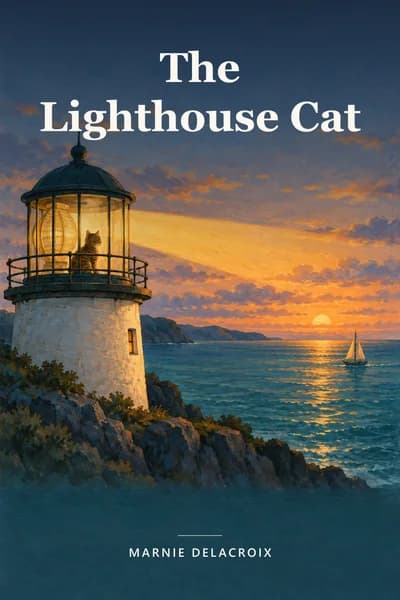
The Lighthouse Cat — a tabby cat watches the sunset from a lighthouse lantern room above a calm sea

The Lighthouse Cat

Marnie Delacroix

The brief: a bedtime picture book for three to six-year-olds where the hero is small and the setting is large. It had to read at bedtime pace, survive being read four hundred times, and work as a cover thumbnail in an online store.

What we did

  • Paginated a 400-word text across 16 spreads, cutting roughly 60 words at page turns
  • Designed the cat at three scales so it stays readable against a lighthouse
  • Built a night palette that stays warm rather than grey, for a bedtime read
  • Kept a clear text band on every spread so type never sits on busy artwork
  • Tested the cover at 20mm, where the cat had to remain the focal point

What was delivered

  • 16 full-bleed spreads at print resolution
  • Character sheet with expressions and turnarounds
  • Print-ready interior with bleed and gutter allowances
  • Cover artwork for print, ebook and a read-aloud edition
Compare

Illustrating a book: the two usual routes

Commissioning directly can work beautifully. It leaves the project management with you.

Cost

With Kangaroo Direct

Higher, because pagination, typesetting and print files are included.

Commissioning an illustrator directly

Lower if you only need artwork and can handle the rest.

Pagination

With Kangaroo Direct

Your text is broken across spreads and edited for page turns.

Commissioning an illustrator directly

Usually your job, and the most common thing first-timers get wrong.

Consistency across spreads

With Kangaroo Direct

Character sheets approved first, colour checked across the whole book.

Commissioning an illustrator directly

Depends on the illustrator working from a character sheet at all.

Print specification

With Kangaroo Direct

Bleed, gutter and trim set to your printer before painting starts.

Commissioning an illustrator directly

Often discovered at the printing stage, when artwork must be redone.

Rights

With Kangaroo Direct

Outright licence to you for all editions, documented.

Commissioning an illustrator directly

Varies. Many illustrators licence per edition or per territory.

Creative relationship

With Kangaroo Direct

Through us, with the illustrator named and involved throughout.

Commissioning an illustrator directly

Direct, which some authors much prefer.

  • You keep your rights

    Full copyright and royalties stay with you

  • Fixed written quotes

    The quote you accept is the amount you pay

  • Australian owned

    Local team, AUD pricing, GST invoices

  • Work you approve

    Nothing goes to print without your sign-off

Questions authors ask

Children's book illustration: questions authors ask

More than any other design service here, because a 32-page picture book is sixteen finished artworks plus character design and typesetting. Chapter-book line illustration costs considerably less per image. We quote after reading the text and agreeing the page count, never per page sight unseen.

Yes, outright, for every edition and territory, and that is written into the agreement before work starts. You get the layered source files as well as the print-ready artwork. The illustrator retains the right to show the work in their own portfolio, which is standard and costs you nothing.

Three to five months for a 32-page book. Pagination and character design take four to six weeks, the storyboard two, and finished artwork two to three months because spreads are painted in batches with consistency checked as the book builds. Chapter books with fewer illustrations are faster.

Yes. We show you two or three illustrators whose style suits your text, with their portfolios, and you choose. If none of them feel right we look again rather than pushing you towards whoever is free. Style mismatch is the one thing that cannot be fixed later with revisions.

We will suggest changes, often substantial ones at the pagination stage, and you decide. Picture-book text has to work with page turns, and sentences frequently need splitting or trimming. Nothing is changed without your approval, but an illustrator working around text that fights the turns produces a weaker book.

We will tell you, early. Picture books run to roughly 500 to 1,000 words across 32 pages; much beyond that and the format is wrong rather than the writing. The honest answer is sometimes a chapter book with line illustrations, which is a different and cheaper project.

Still have a question? A real publisher will answer it.

Start your publishing journey
Make room for your book.

From your desk to a reader’s shelf

Send us your story

Send the text, however rough, and tell us the age you are writing for. We will come back with a view on pagination, a shortlist of illustrators and a price.